How does hybrid cloud architecture work?
For a hybrid cloud to work, integration between several different types of infrastructure is key.
Learning Objectives
After reading this article you will be able to:
- Understand how hybrid cloud architecture works
- Learn the characteristics all hybrid cloud deployments have in common
- Explore the ways that the different parts of a hybrid cloud can be connected
Related Content
What is hybrid cloud?
What is a public cloud?
What is a private cloud?
What is a cloud firewall (FWaaS)?
What is the cloud?
Want to keep learning?
Subscribe to theNET, Cloudflare's monthly recap of the Internet's most popular insights!
Copy article link
What is a hybrid cloud?
A hybrid cloud is a combination of two or more different types of infrastructure: a public cloud, and either a private cloud or on-premise infrastructure. Hybrid cloud deployments are increasingly common; many companies want to combine the power of public cloud computing with more tightly controlled private infrastructure.
What does hybrid cloud architecture look like?
Hybrid cloud architecture can vary quite a bit. A hybrid cloud deployment could combine on-premise infrastructure with a public cloud:

It could also combine a public cloud with a private cloud:

Or it could combine multiple public clouds, private clouds, and on-premise infrastructure. Regardless of the specific setup used, all hybrid cloud architecture will have some traits in common:
- Data integration: An organization's data will be synchronized across their public cloud and non-public cloud infrastructure. Synchronizing data across these different infrastructures can be a challenge, and a business may need to implement an additional technical solution to automatically keep data consistent.
- Network connections: Private clouds, legacy infrastructure, and public clouds are connected to each other, either via the public Internet or over a private network. This network connectivity is crucial for a hybrid cloud deployment to function.
- Unified management: Ideally, hybrid cloud management is handled by one overarching tool, eliminating the need to manage each cloud separately. Managing clouds separately can be difficult because each cloud will have different APIs,* different SLAs,** and different capabilities and features.
*An API, or application programming interface, allows an application to "call" a feature or functionality from another application – or in this case, a cloud service – and incorporate that feature or functionality into the application's own service.
**An "SLA" is a service-level agreement, and it defines the services that a cloud vendor will provide.
How are hybrid clouds connected?
For hybrid clouds, the network connections between the different infrastructures are very important. If they are not connected, an organization isn't truly running a hybrid cloud. Instead, they are running several clouds in parallel with each other, and data may not be aligned across all clouds.
Public clouds, private clouds, and on-premise infrastructure can be connected via these methods:
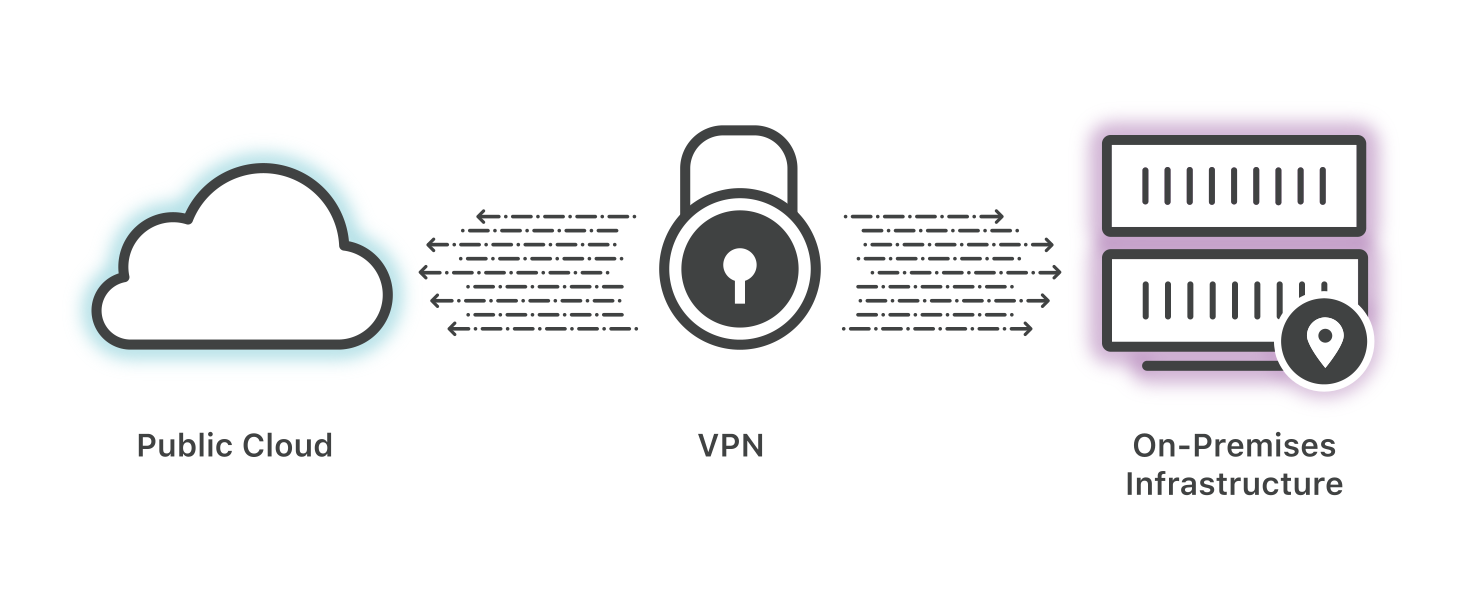
- VPN: A VPN, or virtual private network, enables secure, encrypted connections over the Internet. Since VPN traffic is encrypted, anyone or any machine connected to a VPN can communicate as securely as if they were connected to a private internal network. With a VPN, clouds and on-premises infrastructure can connect safely over the public Internet.
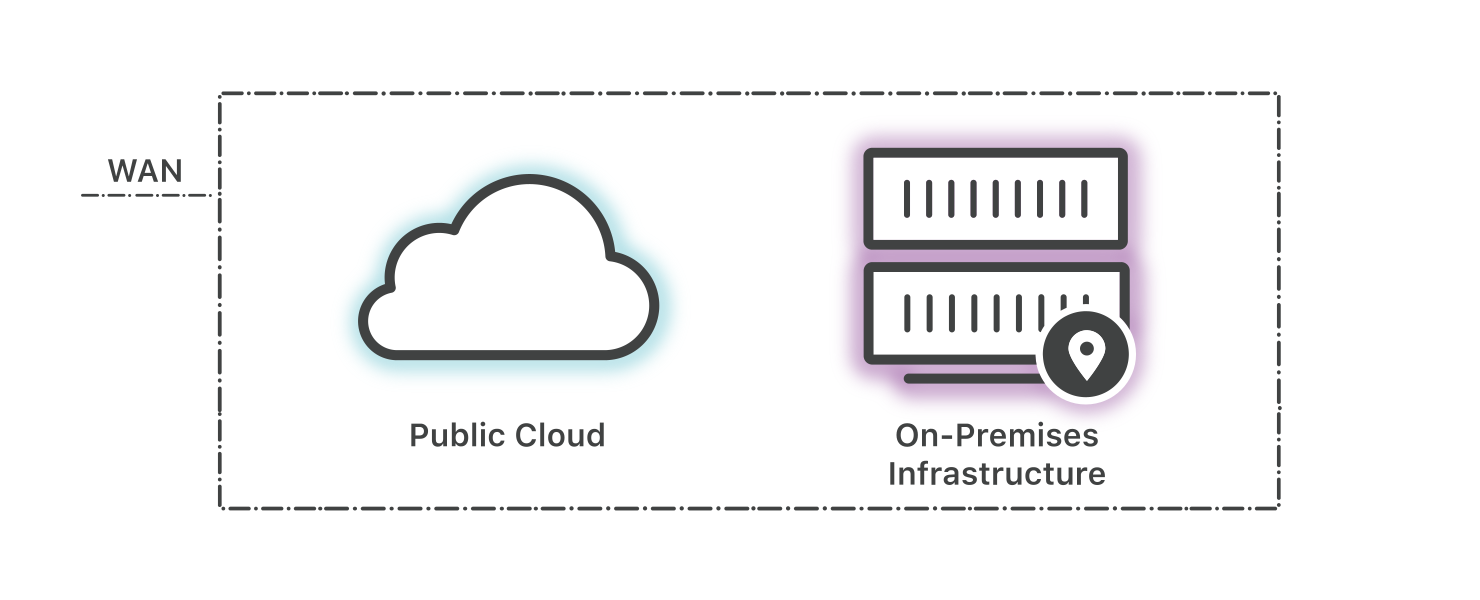
- WAN: A wide area network (WAN) is a network that connects computers over distance, as opposed to a local area network (LAN) that connects computers locally (within the same building or on the same premises). Connections over a WAN are more reliable than connections over the public Internet. For hybrid clouds, a WAN should still encrypt connections using a VPN.
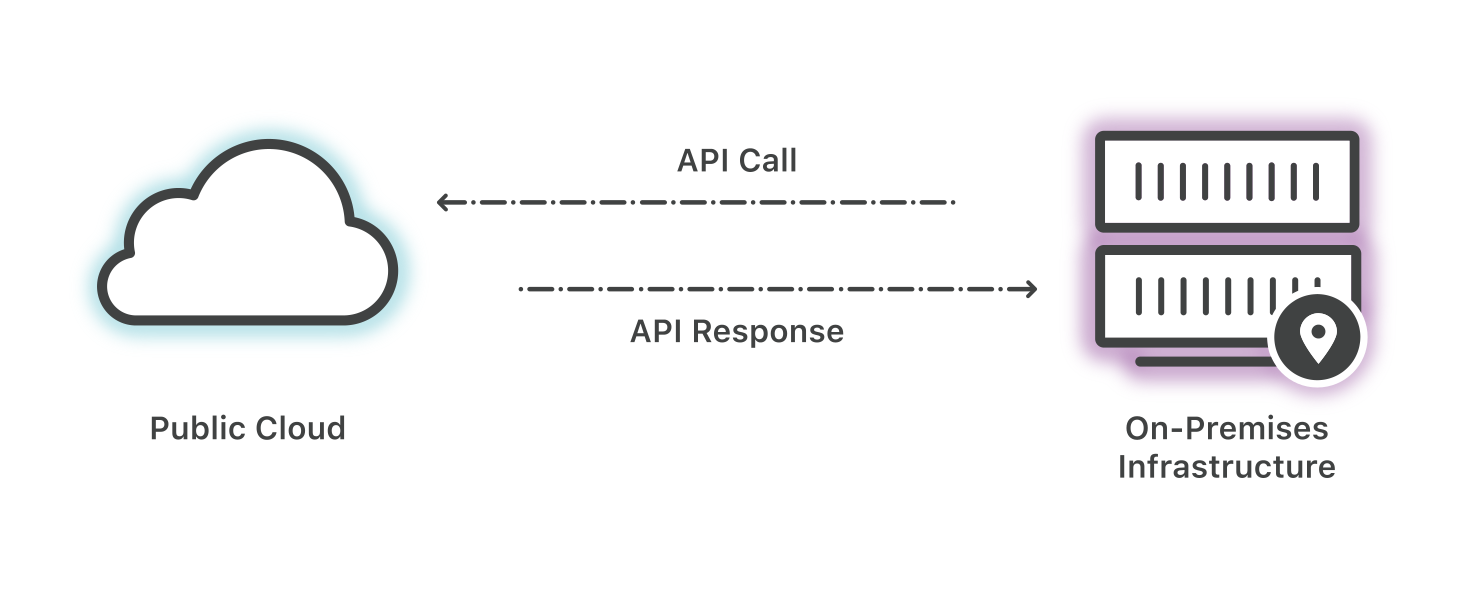
- APIs: API integrations are crucial for making a hybrid cloud work by connecting platforms, databases, applications, and so on. API calls are sent from one cloud to another as HTTP requests, and they can either be sent over the open Internet, a VPN, or a WAN.
How does Cloudflare support hybrid cloud deployments?
Cloudflare makes it easier to manage hybrid cloud deployments in addition to other types of cloud deployments such as multi-cloud. The Cloudflare cloud network, which is distributed across 335 cities in 125 countries, sits in front of any cloud infrastructure and handles DNS, DDoS protection, content acceleration, TLS encryption, and other essential functions. Cloudflare also helps with user access control, a crucial aspect of any cloud deployment.
Learn how a connectivity cloud easily integrates with any type of cloud deployment.
FAQs
What does hybrid cloud mean?
A hybrid cloud is a computing environment that combines two or more distinct types of infrastructure, including cloud environments. Usually, this involves a public cloud paired with either a private cloud or on-premises legacy infrastructure. This setup allows organizations to use the scalability of the public cloud while keeping sensitive data under tighter control.
What are the three essential components required for a hybrid cloud to function?
Hybrid clouds must include 1. data integration to keep information synchronized, 2. reliable network connections between all environments, and 3. unified management. Without these, a business is simply running multiple clouds in parallel rather than a cohesive hybrid system.
Why is data integration a challenge in hybrid cloud setups?
Synchronizing data across different infrastructures is difficult because information must stay consistent between public and non-public environments. Organizations often need to implement specific technical solutions to automatically align data across these varied platforms to ensure accuracy.
How do organizations typically connect their different cloud environments?
There are three primary methods for connecting hybrid cloud infrastructure: using a virtual private network (VPN), utilizing a wide area network (WAN) for long-distance connections, or using API integrations to allow different platforms and applications to communicate via HTTP requests.
What is the benefit of using a unified management tool for a hybrid cloud?
Each cloud provider has its own unique APIs, service-level agreements (SLAs), and specific features. A unified management tool simplifies operations by allowing administrators to control all cloud and on-premises resources from a single interface, rather than managing each one individually.
How do APIs facilitate communication in a hybrid architecture?
APIs, or application programming interfaces, act as the connective tissue that allows one cloud service to request a feature from another. These requests are sent as HTTP messages and can travel over the open Internet, a VPN, or a private WAN.
How does Cloudflare assist in managing and securing hybrid cloud deployments?
Cloudflare provides a global network that sits in front of any type of cloud infrastructure to provide essential services like DNS, DDoS protection, content acceleration, and TLS encryption. It also helps manage user access control, which is a critical security requirement for any hybrid or multi-cloud environment.